Showing posts with label health. Show all posts

Friday, June 21, 2013

City Planning and Collective Health

Dear Municipalities and City Planners Everywhere,

As you, no doubt, are aware, the American Medical Association has recently decided to classify obesity, a condition which affects a large and ever increasing segment of the population (approximately 35.7% of adults per the CDC), as a disease. As the vocabulary of being fat in america changes from a health risk or condition, a state or a symptom to a disease, there are a few different ways this can go. One way, the sadly most likely way, is that anyone with a BMI of over 30 gets further stigmatized and hounded for every little decision they make. The other way is that useful policy changes open up the door to treatment options previously unavailable, increase access to the necessary tools for combating the myriad underlying causes of obesity, and, possibly most importantly, a culture of fat shaming begins to trend to a culture of challenge in which an obese person's healthcare professional takes the time to talk to him or her about their predicament and look for the underlying factors potentially complicating reaching or maintaining a "healthier weight*."

Of course, as a municipality/city planner, this has nothing to do with you, right? Wrong.

As a woman who prefers to walk when possible, I am frequently disappointed, disheartened, and disturbed that in many areas that really should be pedestrian-traffic friendly- shopping areas, hotel and food districts, neighborhoods near busy streets- there is no safe means of walking from one place to the next. Sidewalks end before the street, six lane roads lack crosswalks, and pedestrians can either Frogger it across the road (maybe at the stoplight, maybe not- after all, the crosswalkless stoplight also has the turn lanes with which to contend).

Poor municipal planning endangers the people trying to stay active by choosing to walk instead of drive. It also creates a defeatist mentality wherein people who can walk assume that they can't because they don't feel they can trust that the entire way will be safe. So, instead of walking a mile to the post office, unsure if they'll end up dodging cars or not, they hop in the car, pollute the environment, and spend what could be active minutes sitting. But that mentality seeps into daily lives until two block trips are buckle up and go adventures for no reason other than having been trained to think that way.

So let's work on this. Sidewalks. Crosswalks. Ad campaigns to remind people that you've made it safe for pedestrian traffic. Work with your chamber of commerce to promote outdoor walking activities featuring local businesses.  Look at the cities with great public transportation and pedestrian infrastructure and emulate them. Be part of the solution.

Let's get out there and remove one more obstacle to health, because I don't think they're going to really let anyone call in fat to work or take their 10 weeks of  family medical leave to go to fat camp.

I don't agree that obesity is a disease, but if we're going to call it that, then we need to take the initiative as a society to fix it. City planners aren't responsible for the health of individuals, I'm not saying they are, I'm saying municipalities have the opportunity to do something tangible to help.

Sincerely,
An Obese Woman Who Prefers to Walk

*Healthy weight is an altogether complicated notion, because there really is such a thing as a healthy person who is also obese, well, there was until this week. Largeness does not necessarily mean high blood pressure, impaired mobility, cholesterol and blood sugar problems, and the conflation of these ideas is a huge part of the problem with the way in which our culture approaches health conversations.

Monday, February 11, 2013

Being a Heel

You may or may not have noticed that I sing. I sing with an excellent chorale who routinely performs with a superb symphony. You'll have to take my word for it, but I have always been willing to admit when groups I sing with lack skill or professionalism, and while I can't vouch for every singer in my choir, by the time our conductor is done with us, we're kind of awesome. This year, because we're kind of awesome, another choir has asked us to help them augment their numbers for a large and fabulous choral work which we will be collaboratively performing in two weeks.
We don't regularly collaborate with other choirs. Collaborations require a lot of coordination, and so they're generally undertaken with a lot of forethought, planning, and compromise. They're rare beasts, but not unheard of. Today I was reminded of the primary reason I dislike collaborations. 
Today we received a seemingly innocuous email, and I'm sure you'll think I'm being oversensitive and extreme to be offended by it. You might even be right. But there is this small dress code section that has me A. planning not to comply with the dress code and B. already losing respect for the person making the request, the other choir's director. I am glad that it will be a symphony's maestro who will be conducting the whole ordeal, because I have, in full Elizabeth Bennet style, already decided not to like the collaborating choir's director.
"For concert dress, we're planning on black dresses for the women (with black stockings, black close-toed heels; [our] singers have a uniform, but any simple black dress will do) and tuxes for the men. Hair pulled back, no fragrances."
Simple enough. Our choir wears black from the collarbone down. Long sleeves and dress pants or skirts for women, black socks, black shoes, and the men wear a dark suit, white shirt, and conservative tie. The dress code isn't actually that different, but it has me thoroughly agitated.  
Can you see why I'm going to be the woman who shows up to the performance without having followed the dress code? 
Sure, women being required to wear a dress is kind of sexist, but I'm good with it. It's fairly reasonable to presume that most women who perform in a choir will have some sort of black dress, and they're fairly ubiquitous if one needs to purchase one, granted, I don't have a black-dress budgeted for this season, I am sure I can make do with something I already own. That's not my problem, though I understand entirely if it is a problem for someone else.
It's the close-toed black heels.
Heels? Really?
Did a man just tell me to wear heels? A man who has likely never had to wear heels himself? 
How is it 2013 and women are still being TOLD to wear heels?
About years ago I was wearing my favorite pair of low-heeled Dr. Scholl's sandals, the wooden ones with about a 1.5" heel that they stopped making shortly after I fell in love with them and I was chatting with a rheumatologist. He said a funny thing to me. "I know you're very young, but you really shouldn't wear heels. You're doing a lot of damage to your feet." He went on to talk about a vast swath of patients he sees because of their debilitating foot pain brought on by wearing heels, and stressed it wasn't just women who wore them regularly, that it was also women who frequently donned them for special occasions, and that the damage was directly related to the wearing of heels. 
Of course, I thought he was a nutball. After a debilitating bout of plantar fascilitis at the nearly geriatric age of 32, I started researching shoes with some seriousness. I'd heard, in college, of a woman who had shortened her Achilles Tendon substantially by overwearing heels too much. I thought it was a myth to get us girls to look like hippies in Berkenstocks. It turns out, no one was trying to frighten me. They were just being honest.
Experts on foot pain warn against wearing high heels. 
So, aside from purely feminist issues with being told to wear heels (all the better to admire your calves, my dear), asking people to do something that can be damaging to their health is unethical and inappropriate.
Yes, many women love high heels: the look of them, the feel of them. They have the right to love them, to wear them, to enjoy them. That's their business. And if on very rare occasions I want to wear high heels, it's my business, but do not tell me to.
Actors are often asked to wear or do things that aren't the healthiest things in the world because it's part of the character, and if they're unwilling to do them, then the director finds someone who is willing. Of course, that's the answer isn't it? If, after months of preparation you don't want to wear high heels, don't show up. Right? 
I don't know. 
I suppose I've gotten all of the scathing invective my husband overheard upon my first reading the message out of my system. I'm secure that I'm not going to call the person who rudely suggested that health and comfort are secondary to style for a collaborative community endeavor an arrogant misogynist to his face, but I'm surely going to arrive in flats, because I'm certainly not risking reverting to last year when walking was so painful it brought tears to my eyes. 
So yes, maybe I am too sensitive, but maybe just maybe men need to think before they instruct women to self harm for the visual effect.

Thursday, May 12, 2011

On the notion of taxing sodas and other sweet drinks in the name of obesity.

I think it's absolutely classist, sizeist, and elitist. If something is too unhealthy to be sold in stores, it shouldn't be legal to sell it. As for alcohol and tobacco taxes making harmful compounds less desirable to people, it just means that people who want those things will buy them before doing things like paying bills and buying groceries.


I think a better idea would be regulating GMOs (banning perhaps) and encouraging soft drink companies to use cane sugar instead of HFCS, as corn products are, for many people, a great way to gain wait, and GMOs are a great way to sterilize populations of mice over three generations.

Monday, January 17, 2011

The Argument for Introducing Solids Before Six Months

The argument for introducing solids before six months, is as follows.
Bunk.

UNICEF's response to recent media coverage suggesting otherwise than the WHO recommendation can be found here.  Note the second paragraph says exactly what the problem with this old information is.
 "When considering this analysis it should be noted that three of the four authors have
declared an association with the baby feeding industry. Less breastfeeding and
earlier introduction of solid food will lead to greater profit for this industry."

What's that? Let me highlight for you.
"When considering this analysis it should be noted that three of the four authors have
declared an association with the baby feeding industry. Less breastfeeding and
earlier introduction of solid food will lead to greater profit for this industry."

That's right, all this information which my spouse, my friend's spouse and maybe someone you know is going on about, having seen it on the news on Saturday, is propaganda put forth by a group of individuals with a vested financial interest in convincing mothers to wean to solids earlier.  That doesn't sound like the group one should be taking their advice from, in my opinion.

For the average healthy mother, feeding her average baby is a pretty simple task, as  @KimLiving  of In desperate need of entertainment, said on twitter the other day

So please, don't stress that you need to wean your baby to solids.  Baby will tell you when she or he is ready for solids.  Don't let someone trying to sell you something tell you what your schedule needs to be.  Your baby knows much better than they do when the notion of something other than breast milk should be on the menu.  
Come on, you don't take advice on how often to drink pop from big-soda, do you?  Well, if you're going to take advice from anyone, take it from big-boob, and not big-phrama or big-babyfood, because big-boob isn't trying to worm it's way into your pocket. (If it is, well, I'm sure you could sell those pictures somewhere.)

Sunday, January 16, 2011

So Angry

I have been taking Flintstones Plus Iron vitamins for the last 27 years.  As my iron levels run low, even on a supplement, and most vitamins containing iron make me really sick to my stomach, I've found it's pretty much the only one I can take without becoming ill.  Of course, I couldn't take their Complete vitamin, because Flintstones Complete used Aspartame as a sweetener, and seeing as aspartame is a vile toxin to which I am highly sensitive, to the point of nearly instant migraines upon exposure, violent vomiting, and then diarrhea, I avoid the stuff like the plague.  
Sadly, today when I realized I was out of vitamins we ran to the store, I grabbed my trusty dark pink box of Flintstones, bought them, went home, and quickly popped one in my mouth. As I was breaking down the box while chewing I thought, "man, that tastes wrong."  And I was right. It was wrong.
It was still my once trusty Flintstones Plus Iron, but alas, they've ADDED ASPARTAME.
That's right, in 2011, fully aware of the toxicity of Aspartame, and having ready access to information showing that the information used to get it through FDA regulation some 30 years ago was fraudulent, Bayer chose to add Aspartame to a product.  Not just any product, but one that customers purchased specifically because it did not contain Aspartame. Maybe the three or four people I've had conversations about it's lack of Aspartame being a reason for buying it (in the past) and I are the only ones, but I figure, if I've actually had this conversation with strangers in the store, then there were probably other people out there with the same motivations.
So angry.
So Bayer, I just want you to know that I've lost my trust in you.  You basically just tried to poison me with a chemical I absolutely can't have, and one which could prove seriously damaging those living with Phenylketonuria.   Sure, you printed a warning on the product's back, but the fact is, after years of buying the same product in the same packaging, people quit reading the ingredient list.  Most companies would have had the good graces to at least change the packaging's color.
As I said, I've lost my trust in you.  And it goes farther than just your Flintstones Vitamins.  I don't trust your asprin, becuase you've shown that you change your formulation without properly warning your consumers. I don't trust anything you make and sell. 
I'm angry. 
I'm also looking for safe and healthy alternatives, because you, Bayer, no longer make my "safe and healthy" shortlist.

Friday, November 19, 2010

Doctor's Visit: Follow-Up

Remember Mr. Didn't Want To Go To The Doctor Pants?

The fussy whiny one?
The almost 30 word speaking, even though they only cared if he had 5 words one?
Mr. walks forwards and backwards, goes up and down stairs, runs, climbs, recognizes pictures of things like balls, tries to help mommy pants, otherwise known as Mr. Developmentally Spot On Pants?
Yeah, well, he went to the doctor and started screaming the moment I started undressing him.
He didn't stop except for when I was nursing him.
He tried four times to climb off the scale and the nurse just wrote down what it looked like.
The problem with that was, it was grossly inaccurate, such that the doctor came in all panicked that my 18 month old light weight had allegedly lost four pounds.  You know, when they're supposed to be gaining?
So after a much screaming, crying, trying to get away filled nightmare of a time, we determined that mommy could get weighed, then pick up the boy boy, so we could do some math and derive his weight.
Yes, he's on track, but he was not a happy camper.
At all.
At all, at all.
He was so upset that the doctor was surprised and said that if he wasn't feeling his regular happy self in two or three days, to bring him back.
Well, since then he's had a little diarrhea and has barely eaten. All he wants to do is nurse, and I'm okay with that, other than his new penchant for giving me a TSA pat down while he's nursing. That has made me say that I'm very glad that we didn't wean him early like so many people have pressured us to do.  I don't know what we'd do if he was feeling sickly and didn't have his favorite means of nourishing and comforting.
In any case, he slept most of yesterday and today seems to be just chipper. He has a bit of a runny nose, but when do teething toddler babies not have runny noses?  So I'm not too worried about that.
My biggest concern is how much he hates going to the doctor.  A friend recommended that I procure a toy doctor's kit so he can get used to the idea of the various equipment, like stethoscopes and the ear scopes.
Any other advice on making the trip to the doctor's office less traumatic?
Or, do you have a doctor's kit you love and want me to know about before I start seriously looking for one?

Thursday, October 14, 2010

Did I mention the Frankenbelly?

So as I pointed out yesterday, we've been working on some home improvement projects that have been dragging pretty badly.
This is partly a result of the Frankenbelly.
See, about two months ago we rented a huge dumpster.  A really huge dumpster. The plan was to pull out all the creepy stuff from the garage and basement and load it up in the dumpster with haste so as to not obsess over each bit of moth eaten or mildew retaining sentiment we came upon.  It started quite promisingly, but then spouse thought he had dislocated a rib.  He was in horrid pain after the first few days of moving stuff around and the pain kept getting worse.
Well, one night it was unbearable and he was having trouble breathing. Deciding that chest pain and shortness of breath was a bad combination in a forty something dude with high blood pressure, we went, late at night, to the emergency room.  Many many exhausting hours, much dilaudid, an EKG, CT, X-Ray, bloodwork and Ultrasound later, the culprit turned out to be his gallbladder.
Also, look for my "surviving the ER with a baby" post tomorrow.
How is YOUR pain?

I did enjoy getting to watch the ultrasound and finding that I could identify some organs much more easily than I had expected, but I could also tell it was pretty bad by the way his gallbladder looked like a cross-section relief of a bag of polyhedrals, mostly D-20s.
The ER doctor referred spouse directly to the surgeon on call who couldn't see him til the following Tuesday. He basically survived the weekend on percocet and laying still.  Surgery was scheduled for Wednesday, and the laproscopic version turned out to be a big bag of FAIL.  Apparently his gangrenous and scarred gallbladder had adhered to things it shouldn't have and he had to have the big nasty open cholecystectomy.
Lovely.
So, 40 staples and a 10" scar later, his neat and clean outpatient surgery has turned into a multi-day inpatient stay.  Then a week later it was back to the ER with horrible chest pain and shortness of breath.
This time?  Bile leak into the chest cavity. You don't want that.  Another small surgery to place a drain and it was time to go home. For a day.
Why just a day? Back to the ER with even more unbearable chest pain and shortness of breath.  (He also got a lot of oxygen in the hospital with each stay because that's what happens when you've got 20+ oz of bile pressing against your lungs.)  What?  more bile leak issues?  Isn't there a drain?  Oops. the drain was completely clogged. Drat.  So, drain flushed, and sent home again.
About a week later he was scheduled for an ERCP to place a stent to stop the leak.  That will come out in about another week.  Of course, the stent placement led to pancreatitis, which led to weakness, which led to him turning blue and hypoxic.  But he seems pretty stable these days.  It will be 9 weeks of medical drama when that stent comes out, and we're optimistic that they won't have to put a new stent in and that he won't get pancreatitis again.  You know, because I'm an optimistic fool like that, but here's to hoping.

So now he has a scarred up Frankenbelly, and it's making it a little hard to get much done that involves heavy lifting and more than one person.  But we're still going at it.  Wish us luck!

Thursday, June 17, 2010

What's that Smell?

Yep, I'm back to the underarms.


So, I was looking at something that would smell really yummy on Etsy, mostly because my awesome friend Brooke uses it, and I trust her judgement,  but I wasn't 100% sure after reading the ingredient list that I was absolutely comfortable with it.
I know you shouldn't believe everything you read online, BUT, when I'm researching the safety of stuff, I generally find a few sites saying "oh no, that causes pterodactylitis" or some such, and decide that chemical isn't one I want to knowingly be rubbing on myself.  In the case of that one, I found two which made me raise an eyebrow.  Salicylic Acid and Propylene Glycol. So I Googled them and here's what I found.
Salicylic acid is used in Proactiv, and has wonderful astringent properties, but is recommended that pregnant women don't ingest it, and some doctors recommend they not rub it on themselves either. Well, I'm not pregnant, but that gives me pause.  
Propylene Glycol was apparently originally developed as an anti-freeze and it's Material Safety Data Sheet says to avoid physical contact with the stuff and that it can cause " eye irritation, skin irritation. Chronic exposure can cause gastro-intestinal disturbances, nausea, headache, vomiting, and central nervous depression."(source)
Well, when I was about twelve I developed a problem with gastro-intestinal disturbances, nausea, headache, and vomiting, so I generally try to avoid things prone to cause those things.  I've been living with these chronic issues long enough that they've reached the age of majority, and in a moment of wishful thinking I pondered if there could be any connection.
Like I said, wishful thinking, but dang it, if there's a chance, I'm going to take it, especially when all that taking it means is not rubbing antifreeze on myself.


So, what does this mean? It very well may mean making my own deodorant. There's a handy dandy tutorial here at Little House in the Suburbs and I'm not entirely sure that this isn't what I'm going to end up doing.
That said, I have found a couple Etsy shops which sell deodorants which don't contain aluminum (yeah, I haven't talked about that much, since that's the ingredient just about everyone knows we're avoiding because it is strongly correlated with Alzheimers) Salicylic Acid, or Propylene Glycol.  


They are:


Elegant Rose Boutique (can you say peppermint vanilla?)
Art Spot  (they're from Corsicana, TX, and I've BEEN THERE!!! *and* there's Apple)
Cheryl Mason's Kitchen  (she uses arrow root which is good for the types with yeast issues)


Let me know if you find some more great options.
And yes, I've checked- JASON and Toms both have Propylene Glycol, and the mineral salts have never worked well for me longterm.


Sunday, June 06, 2010

The Pits.

What do your arm pits smell like right now?
Yeah, it's a weird question, but that was what my friend Kim asked my friend Brooke the other day and the answer got me thinking.
I'm still using antiperspirant.  I hear it's actually pretty scary unhealthy to do so, since using aluminum to clog your pores is tentatively linked to things like breast cancer, and I kind of hate breast cancer. A lot.  I've also wondered if clogging your pores makes you sweat more to try to clear them.
Oh, sorry, I forgot to mention, this post talks about bodily functions, smelly stuff and might not be the best reading for any pregnant readers who get nauseated at the thought of smelly stuff or bodily functions. Wow, it apparently also deals with nausea.
Where was I?
Ah yes. Toxic Stew.  I don't like the idea of rubbing solidified toxic stew on my body.  I only occasionally fall back on regular shampoo, loving the no-poo for my hair, have recently discovered some delightfully more eco and skin friendly soaps (mmmm, castile soap- so few ingredients, you can count them on ONE HAND, and all but one are edible) and have been working on detoxing my personal hygiene routine as much as possible.
So, I'm asking you.
Are you still using antiperspirant?  Have you switched to a deoderant instead?  If you have, how do you like it? Do you get all wet and gicky or not much more than the rest of you?
I'm thinking of taking the plunge, but I'm scared, so hold my hand, and lemme know, what do your pits smell like.

And at the moment, mine smell like baby powder, which isn't exactly my favorite smell in the world.

Wednesday, June 02, 2010

Vaccinating against health.

According to an article by Judith Potts for Telegraph, there's some very promising strides being made toward a vaccine which could prevent breast cancer.


This is a topic near and dear to my heart.  In 2007, my grandmother was diagnosed with breast cancer. In 2009 she passed away.  Despite a mastectomy, hormonal therapy, and radiation, the tumors kept recurring and spreading.  Breast cancer terrifies me.  
YET, I'm not thrilled about this possible vaccine.Why?


According to the article,  an immunologist at the Cleveland Clinic in Ohio, Dr Vincent Tuohy, as well as other researchers such as Dr Leatham, at University College London, have found a specific protein, alpha-lactalbumin, which is present in the majority of breast cancer tumors.  So their brilliant thought?  Innoculate against the protien.  They figure that if they can trick the body into having an immunological response against the protien, then the chance of the cancer developing is reduced. 
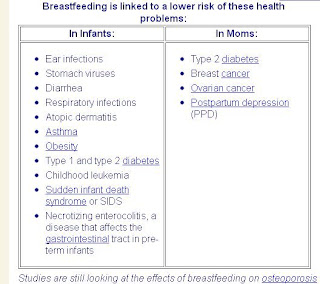
That's all fine and dandy, except the part where alpha-lactalbumin is also a component of breast milk.  You know, that stuff that humans, as mammals, produce in order to nourish their offspring?  You know, that stuff which developed as part of the immune system in order to help the infant transition from a sterile environment into one full of thousands of bacteria and viruses.  You know, the stuff that helps the developing intestines transition to foods and reduces the likelihood of allergies?  You know, the stuff that has been associated with higher IQs, stronger immune system, and lowered risk of Type II diabetes in both the mother and child, lowered risk of obesity, lowered risk of asthma, and lower incidence of crib death SIDS.
Oh yeah, I almost forgot, breast feeding is also linked to lower risk of breast cancer in the mom. 


So the notion is, give females this vaccine so they maybe won't develop breast cancer, you know, the thing they're less likely to get if they have a healthy immune system (possibly in part to having been breast fed) are not obese (partially linked to having been breast fed) and if they breastfeed their own offspring.


The only foreseeable tradeoff?  Their offspring are less healthy and women are still being put at risk.  Not to mention the whole experimental nature of this type of treatment.
This part here possibly makes me the most nervous.  Potts writes " this [theorized] vaccine will be used on young women – particularly those who have a family history of breast cancer – and those over the age of 40, when the cancer is more likely to develop but when they are less likely to be breastfeeding."


That's right.  The idea is to give it to those with a history of breast cancer, you know, the ones who could possibly benefit most from the many health benefits of breast feeding.   


I hate to say it, but this is one case in which I feel like it's one big step for science, and two big steps backwards for women and children's health.


Disclosure: I'm not a doctor, a nurse, or any other sort of medical professional.  I am expressing my opinions based on research I have done as a mother, a lactivist, and a woman who has lost a family member to this horrific disease. 


Wednesday, May 19, 2010

Survival

That's what we've been focusing on lately. Survival.
It started with a sweet baby who had a cold, and fussed night and day, stubbornly repudiating sleep.  Although that was energy consuming, it was survivable.  I felt mostly peachy, and armed with about 150 mg of caffeine a day, I was good to go. Sleep was for wimps.
You see where this is going, right?
Well, in my foolishness I forgot that I can only survive so long on caffeine and no sleep.  The result, now I've caught a different cold, which I've passed on to Mr. Teething with a Cold.  That's right.  A whole new round of fevers, running noses, coughs and misery for the baby, coupled with mom who feels like she has snot for blood.


So, since someone should benefit, my Top 10 Sickness Survival Tips.


1. Cancel, cancel, cancel.  If it's not absolutely necessary, cancel it.  Appointments, blog memes, whatever. Call, email, txt whomever you need to so you can focus on recovering.
2. Love the environment later.  I am all about the hankie for blowing your nose, but frankly, I only have so many, and doing laundry when I'm really sick isn't helping anyone out.  So yep, if I'm really sick and running out of cloth nosesipes?  Toilet paper works.  So do tissues, but really?  Buying paper specifically for nose blowing? No thank you.
3. Accept help.  It's harder than it sounds, but being the Allmother and doing all things by yourself all the time is just going to leave you more tired and more sick.  Let your spouse/partner/older kids help out by cooking for you- even if it's gross macaroni and cheese.  Starving doesn't actually help anyone heal.  When they ask "can I get you anything," don't sigh "no," because the directions you'd need to give them are more than two sentences.  Take a deep breath, make eye contact, and tell them what you need.
4. Got water?  Keep a glass or BPA free reusasable water bottle by your bed or by the couch where you're laying trying not to die.  Fluids are your friends.
5. Have someone help you kidlet proof your bedroom and any other room you might lose consciousness in, and then keep the door closed so that if your baby gets loose while you're busy not dying, you don't have to freak out that they're going to eat your tax records, get tangled in computer cords, or find the power drill.
6. This one involves prep.  Sick toys.  You're sick, your kidlet is probably sick too.  Keep a box of EASILY WASHABLE toys that baby only plays with when sick.  Then have someone HELP you put away the regular toys and get these out when you're sick.  Whether they're hard toys that are easy to scrub down or soft toys that wash up well, be sure to wash them and put them away when everyone's recovered.  These are extra fun for the wee one, and more apt to capture baby's attention longer because they're a special treat.  
7.  Use the phone.  Remember that whole starvation sucks thing?  Well it does. Sucks the life right out of you.  So if it comes down to it, and you can afford it, don't be afraid to order in.  You're not going to snog the pizza gal, so you're probably not going to get her sick.  And even if the food isn't the wonderfully nutrient packed goodness you'd have cooked if you were feeling 100%, again, starvation bad.
8. DVDs.  You're not going to get anything done.  Don't try to pretend you're going to use this down time to catch up on the family tree, or knit that baby blanket for your best friend's sister's shower. No one wants a plague blanket.  Veg out already and get better.
9.  Accept that some days you just don't have 9 in you and roll on.
10. Keep your phone handy so you can text, IM, tweet, and FB your way through.  To those of you who can't do these things on your phone... well, I'm sorry, but after last year's bedrest episode, I can't imagine not having any means of contacting the outside world and my best suggestion is to bring your laptop to bed with you.


Note- I never assume anyone is going to be so helpful as to take the baby for most of the day. Besides, if you're breastfeeding, that wouldn't help at all anyway.  

Friday, April 16, 2010

You're eating what?


This morning I awoke to a rant.
@Sheepmama, a delightful woman whom I happily follow on twitter made the mistake of shopping casually and not reading the full ingredient list on a breakfast cereal purporting to be healthy. Consequently, when she noticed the list of ingredients she couldn't pronounce, along with the dreaded "High Fructose Corn Syrup," she got a little irritated, and I can't blame her.
Food marketers get away with far too many misleading statements.
She made a few great points about claiming that things are "all natural" and the notion that just because it's natural, it's good.

I have to agree with her. Everything was made from something found in nature. But there comes a point in the chemical processing when one has to step back and say "it ain't natural no more." Because it isn't. Saying "But we used corn to make it," does not mean that it is any less processed or unnatural than plastics, bleaches, solvents, or dioxins. It just means that the base material is one with which people are generally familiar.

Furthermore, corn isn't precisely the most natural thing out there. When one takes into consideration the pesticides frequently used in it's growth as well as the genetic engineering of the plant, it is very hard to argue that corn is itself a natural commodity these days.

In closing, she left us with this delicious sounding recipe for a crock pot cereal. Yum.

3 cups water, 2 1/2 cups quality apple juice, 1/2 cup barley, 1/2 cup steel cut oats, 1/2 cup dried cranberries, 1/2 cup dried apricots,chop (here)

1/4 cup quinoa, 1/4 cup wheat berries, 1/4 tsp salt, 1/4 cup honey (here)

Put everything except the honey in the rockppt overnight. If desired ad l&d the honey in the morning. Top w toasted sliced almonds. Enjoy! (here)


Somehow I like an ingredient list I can understand.

Do you have any simple alternatives for a healthy/ier breakfast?

Tuesday, March 30, 2010

Cora's Day

Today, Cora is four months old, and in her memory, Snapdragon is pinking it up, even if he's a boy.
Why do we wear pink on the 30th of each month in memory of Cora? Because we're helping Cora save lives.
You can read Cora's Story on my friend Kristine's blog, and then, in honor of Cora, put on some pink, and do something nice for someone else. I haven't found our good deed for the day just yet, but we're working on it.
Most importantly, let your children and loved ones know how much they mean to you. Take a few extra minutes out to play a game or go for a walk with the ones you love, and if you know a new mother to be, please let her know that many congenital heart defects can be detected with a non-invasive, simple, and painless pulse oximetry test.
Help Cora save lives, and make the world a better place for those living in it.

Tuesday, October 20, 2009

What is this food of which you speak?

Snapdragon is 24 weeks old today. If we used a lunar calendar, tha'd be six months.
But we don't, and it isn't.

In case you missed it, the current reccomendation is to wait until at least six months before introducing solids. There are a lot of good reasons. The two that stay foremost in my mind are 1. To prevent/reduce likelyhood of developing allergies. 2. To wait til the baby is developmentally ready for foods.
Well, Snapdragon *wants* food. He strains against his highchair strap, stretching his neck and arms, trying to get our food. He mimics our behavior at dinner time. He wants the food. He very nearly got ahold of Spouse's banana this morning.
But I'm supposed to put it off for another 16 days, by the calendar.
16 days.
What difference can this two weeks and two days possibly make?
The paranoid part of me that won't eat peanut butter because dr.s in some countries say the protien to which people are allergic passes directly into breastmilk, that part saus "but what if I expose him to foods 16 days too early and he develops an allergy?
Then part of me sees his frustration at not being able to eat with the rest of us, and I feel like he's developmentally begging for a chance to taste something other than mama-milk.
So frustrating.

Am I nuts here? Is it too soon?
When did you start solids with your little one? Any regrets?

Friday, July 24, 2009

"Because" Healthcare

Do you remember being young and full of questions? Remember pestering your parents with them until they turned to the answer "Because I said so," and then you'd be like "by why?"
I kinda feel that way about our children's healthcare.
We're living in a day and age of "because I said so" treatments, procedures, and medications. When was the last time your doctor explained just what the exact reason your blood pressure was high and just how that pricey perscription (whose name also happens to be on the pen she signed said perscription with) works?
No. Your blood pressure is high, so take this. Why? Because.
And when did they ever sit you down to explain just why that medication your on says to avoid prolonged sun exposure? They just expect you to accept that you have to, because. No, they can't inform you as to whether it causes rashes, increased intensity of sunburn, or as in some cases, magnifies the effects of the medication much like alcohol. By treating health decisions on a "because" basis, patients are robbed of their own ability to make rational decisions for themselves. Its degrading, because it assumes we are stupid.
Its the same way with vaccinations.
When was the last time your conversation with your child's pediatrician was more than "looks like Millicent's due for her next round of shots." And if you ask why, you get the medical version of "because."
Show me the studies which prove its safe, don't just brush me off with "school system requirements." That, my friends, is a load of bull.
Show me, through unbiased studies with clear and unquestionable results, that I need to subject my child to injections of toxins. Don"t brush me off like an over-inquisitive five year old who wants to know why you're shining that light in his ears.
If everything the medical world is pushing on us is so very beneficial, then why don't they go out of their way to educate us? Why do they not supply us with information, accessible, easy to comprehend information, until we're begging them to say "because?" Because they don't think we'll like the answers.
As always, if I'm wrong, then please, please, please prove me wrong.
Educate people so they can make informed decisions, not just about vaccines, but about medicines, tests, procedures, and even multi vitamins. A school requirement is not a reason to make a health decision. Health is a reason to make a health decision.

Thursday, July 23, 2009

We Want You to Breastfeed, Honestly, We Do.

What's the old truism? If someone uses words like "honestly" a lot, than they're probably being anything but.
Well, that's kind of how I'm feeling about the very helpful people from the WIC office.
Oh, yeah, by the way, we're broke. I get WIC, and no, this isn't an invitation to lecture me about your tax dollars. We've paid quite a few of those ourselves before health!fail coupled with economy!fail put us in this position.
So the kindly helpful people at the WIC office.
Their literature says things like "Breast is Best" and all other sorts of glib pro-breastfeeding mantras decorate their walls. They even make a point of saying "feel free to nurse him" when a baby starts fussing during an appointment or in the lobby. They even give nursing moms food so that they can keep on eating, which is kinda crucial to the whole making milk for babies thing.
BUT, I walked out of my last WIC appointment kinda flabergasted at the anti-breastfeeding message they were accidentally sending.
They make it easy to quit.
Too easy.
I should have counted, but failed to, the numerous instances in which they pointed out that even though I'd made the desicion to breastfeed and things were going smoothly, should I decide to change my mind at any time, I just needed to bring in the vouchers printed "Congratulations on your continued breastfeeding success" and exchange them for formula coupons.
What?
I get that its wonderful that for women who for one reason or another feel they can't continue to breastfeed, or breastfeed exclusively, that there is an option available which insures that their infants won't starve, but come on!
First of all, the wording on the vouchers implies that breastfeeding is some sort of extra-credit activity and it's pat on the back worthy. It implies that success at breastfeeding is extraordinary and unusual. It implies that success is something special and therefore not the norm. Instead of encouraging and supporting, it reads like "you're doing well, and we're surprised." It almost reads like the sort of slogan you'd expect to hear at a meeting aimed at helping people overcome their addictions. "Congratulations on your continued sobriety success," as though holding one's breath against a relapse.
Further, these vouchers make it so simple. All you have to do is go back, without an appointment, and exchange them. Why not make it a little harder? I don't want it to be impossible or so complicated that mothers would rather starve their children until the next appointment than go to the hassle of utilizing the formula if they really do hit a wall, but if it were just a touch more labor intensive to quit, maybe women would try harder not to.
I can't tell you how many times they pointed this out to me, but after about five times, it began to feel like the kind woman behind the desk wanted me to cave and say "yes, already, it really is too much for me, please give us some formula!"
Maybe it was just the way she kept referencing reasons a person might want to switch to formula. "If it gets to be too much," "If you have any troubles like sorenes." I wanted to scream "STOP GIVING ME REASONS TO WANT TO QUIT!"
I was most disturbed because, having been the woman who did quit breastfeeding my first, I remember how comforting it was that everyone around me made it too easy to stop. I wasn't as committed last time as I am this time, and so I embraced their reassurances that it was okay, and I held tight to the belief that the support network around me would have made it harder to quit if quitting was really a bad idea.
Well, guess what, folks, quitting is and was a bad idea.
The human animal was intended to be raised on human milk. In much the same way that baby mice do not drink cat milk, and puppies do not drink gorilla milk, humans were not meant to drink cows milk, and were certainly not intended to drink a chemical soup designed in a laboratory and mass produced in China for convenience sake.
No. Humans were made to drink human milk. Studies have time and time shown that being breastfed, and not just drinking breast milk, is the best and healthiest way for an infant to feed. So why then do doctors offices and the WIC office go out of their way to make it so damned easy to quit?
Because, honestly, for one reason or another, they'd prefer it if you didn't. If that's not the case, then please, oh please, let them prove me wrong through their actions, and not their lofty protestations.

Saturday, July 18, 2009

Mommy!Fail

So this is me, feeling like the craptastic mama supreme.
Shortly before Snapdragon was born, my mother took in a pregnant stray cat.
No, really. She was that foolish. It wasn't even a soft or pretty cat.
In defense of this fourlegged creature which would be christened "Tiny," she was a friendly cat.
Well, as I mentioned, Tiny was with kitten, and I'm sure you all know how that happened, hanging out with some friendly Tom. Sadly, Tom wasn't the only fun guy Tiny had been hanging out with. No, she'd been hanging out with ringworm.
Now, for those of you who don't know, ringworm is a kind of fungus. Sorta like yeast. Ringworm likes to live on your skin and heals from the center out as it expands outward. It starts off looking like a pimple which blisters. So innocuous you'd be likely to ignore it until the center de-red-ified and keft you with a largening telltale ring of red. Mostly, that's what it looks like. It glows under a "blue light" I always called them black lights, but the vet says blue, so we'll go with that. If it gets on your scalp it behaves like cradle cap, causing scaly patches. Oh yeah, and your hair will break off at the contact point.I almost forgot to mention that part.
So Mongoosine loved Tiny, and no one ever thought it might be a problem that she cuddled Tiny. Then she started cuddeling the kittens when they were born. No one wondered why Tiny had a bald spot. She'd been a stray and cats who scratch at wounds tend to have bald spots too.
Then no one wondered too hard at why the kitens had bald patches. We figured that Tiny, being a slightly neurotic new mamakitty was probably over cleaning.
But then Mongoosine got the first of what would collectively come to be known of as "the spots." Her first spot if "Scourge" was showing and identifiable by Mother's day.
Since then we have been waging war against the scourge. She has been fighting it like mad and she hasn't been alone. My mother, father, spouse, aunt, iuncle, their three children, and my nephew have all contracted the scourge. Mongoosine was the only one who was showing signs of improvement. As a matter of fact, this weekend she was declared scourge free and the interaction with Snapdragon interdiction was lifted.
Today she was feeling happy and having fun with her grandmother. They put sun-in in her hairand she played outside. Later this evening, as my mother was admiring the highlights from across the room she saw something funny. She called Mongoosine over. It was something whitish. My mother was confused.
Alas, it was her scalp where her hair had broken and fallen off leaving a large bald spot.apparently, we mised a spot.
When she called, I used explatives best not typed. I am very unhappy. I am angry, I am hurt, and I don't know how to make this stop. But I also feel terribly guilty that I've been so wrapped up in Snapdragon, I didn't realize Mongoosine had scourge on her head before it became something which although she will claim doesn't bother her, is ultimately stigmatizing for a tween.
This was total mommy fail on so many levels, starting when my mommy let mommy cat in to start with.